

What Is a Bunk Single Bed?
A bunk single bed is a kind of bed arrangement that has a mattress stacked above another. It is ideal for hospitals with limited space.
It is important to choose the right size mattress for your bunk beds. A mattress that is too thick on the top bunk may be taller than the rails on the guard and create a safety hazard.
Cost-Effective
Bunk single beds are a budget-friendly and space-saving option for facilities that must accommodate multiple patients. They can be arranged in a variety of ways to fit into rooms with a limited space. They can be set parallel to each other, in an L-shape, or divided into two beds - a high sleeper and a regular single bed - whatever makes most sense for your facility and the demographics of your patients.
Although bunk beds might cost less upfront than single beds, their multi-tier design can result in higher maintenance costs in long run. A study in the Journal of Facilities Management reports that bunk beds typically need 15 percent more maintenance than single beds. This includes regular inspections, prompt repairs as well as security and comfort.
In addition, bunk beds can be more difficult to clean and maintain due to their complex design. Cleaning and caring for beds can be a challenge by the need to climb a ladder in order to reach the top of the mattress. This can be a challenge for older adults or people with mobility issues or poor balance and an increased risk of falling. Single beds provide greater accessibility and convenience for sanitizing and cleaning, which is important to ensure high hygiene standards in hospitals.
Bunk beds are more expensive in the long run, not only due to their initial cost but also because they're more difficult to maintain. Depending on the configuration, they can take up more room than a single bed, and may require additional accessories, such as storage drawers or trundle beds. Some brands and models might be more affordable than others, but the quality and style of the product will also affect the price.
It is also essential to think about whether bunk beds are right for your child or teenager. Standard bunk beds are made up of two twin mattresses stacked on top of each other. However you can select between various configurations. For instance a full-over-full bunk bed provides more space for sleeping for larger children or taller adults who share a room with their siblings. You can also opt for a futon bunk bed that combines the twin mattresses with an area of a sofa beneath.
Space-Saving
Bunk beds can be ideal for families that want to save space while still giving their children a sense of belonging and individuality. They can also let siblings share a space and sleep together, without having to sacrifice floor space. Bunk single beds are available in many sizes and configurations that can be tailored to meet the requirements of your family. The most popular choices are twin over twin, full over a full, and trundle over a twin. Depending on which type of bunk bed you pick there are a variety of options to increase the use of your bunk bed. Under-bed drawers for instance are a well-liked feature that lets you storage of bedding and other items underneath the lower bunk. A trundle is another useful add-on that allows you to accommodate guests who are staying overnight and increase sleeping capacity when required.
If you decide to choose a bunk that features stairs instead of ladders, you'll want to consider the weight and the height of the mattresses you select. Stairs are generally thought to be safer for children than ladders and use less floor space. You should consider whether you'll need guardrails for the top bunk, and how much room you have in the room of your child for storage and stairs.
The single bunks can be stacked in order to accommodate several guests. This is great for shared rooms at youth psychiatric and rehabilitation units. This allows these crowded environments accommodate more patients without needing to increase the size of their facility or construct a more specific accommodation. These beds can also be disassembled and repositioned to accommodate the requirements of a specific arrangement.
The addition of a bed to a small room can let floor space go and create more open room to do other things. It's important to remember that an extra bed will take up more storage space than two beds. This is especially true if you choose to buy a bunk bed that features drawers under the bed. Another option is a single bunk with an integrated trundle or futon that has a couch underneath it. These options are more flexible and suitable for families who frequently entertain guests or have children who stay over.
Convenience
Bunk beds are great for children's rooms and are a favorite among parents who want to fit many children in one room. They can also be an excellent addition to guest bedrooms. While a lot of people think of bunk beds with twin mattresses that are stacked one on one another, there are several different types available to fit various needs. These include traditional bunk beds as well as futon bunk beds and even trundle bed frames that offer additional sleeping space underneath the bunk on the bottom.
Single bunk beds are simpler to clean than single beds. Single bunk beds can help health facilities save money and maintain high hygiene standards, particularly in rooms where patients suffering from chronic diseases or infections are commonly present. Single bunk beds help prevent bed bugs, parasites and other pests from spreading into other areas of a facility.
Another advantage of bunk single beds is that they are easy for children to use. Low and stable, they decrease the chance of falling, which is a major problem in hospitals and care facilities. They can be fitted with guardrails, however they must be erected properly to ensure safety for children.
Some bunk beds are equipped with a ladder that can be straight or angled, to allow children to climb into and out of the upper bed. Others come with a staircase that takes up more space but is also more elegant and stylish. Depending on the type of bunk bed, the staircase might include storage drawers built-in.
Although bunk beds can be very convenient however, they have their drawbacks. this content include strangulation and entrapment risks. It's dangerous for children to hang things on their bunk beds. This includes clothes belts, sports equipment and jump ropes. It is also essential to teach children to store their toys in a designated space or place them in a box. This will help avoid them from getting caught in the railings or slats of the bunk bed.
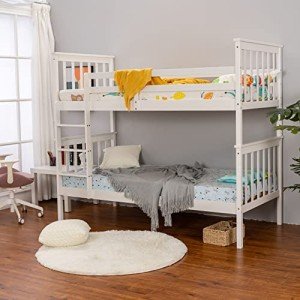
Safety
While bunk beds might appear like a fun addition to your child’s bedroom but they are not with no dangers. Bunk beds are responsible for numerous injuries every year. They can be avoided by ensuring that the bed is constructed properly and meets safety standards.
Bunk beds must have guard railings on all sides of the upper levels. This is essential to stop children from falling off the bed while they are asleep or playing. The guardrails must be a good height to avoid getting caught between the top bunk and the wall. It is also crucial to make sure that the ladder is firmly fixed to the frame and placed at a safe angle to prevent accidents.
A mattress protector should also be laid out on the floor beneath the bunk bed. This will stop the bed from becoming slippery and help reduce the risk of injuries if kids fall off. It is also recommended to have the floor softened by placing a rug or carpet. This will protect your children from cold floors in winter.
It is also recommended to check the instructions of the manufacturer for the bunk bed to make sure that it meets UK safety standards. These guidelines will usually contain information about assembly as well as use and maintenance that are not apparent in the product description or other sources online.
Also, make sure that your children are mentally and physically ready to use the bunk bed. This means that they must be able follow instructions and avoid horseplay. They must not have any behavior issues that could make them unfit for the top bunk. Lastly, the kids must be capable of climbing up and down the ladder in a safe manner and shouldn't be too young for this type of activity.
The most frequent injury resulting from bunk beds is falls from the top level. Therefore, it is crucial to put in guard rails that are at least five inches over the mattress. The guard rails should be sturdy and evenly spaced to prevent the entrapment.